Steel buildings have evolved significantly over the past century, adapting to new engineering standards, materials, construction methods, and end-use applications. While traditional rigid-frame and tubular steel buildings remain the most common solution for garages, workshops, barns, and commercial facilities, steel arch buildings—often referred to as Quonset hut–style buildings—continue to play an important and growing role in modern construction.
This page provides a complete, unbiased overview of steel arch building systems, how they work, where they excel, and how they compare to the conventional steel buildings SteelBuildingGarages.com is best known for. The goal is not to recommend one system over another, but to help builders, property owners, municipalities, and contractors understand the differences so the right solution can be selected for each project.
For readers who want in-depth arch building options, pricing, and configurations, we provide direct links to SteelArchBuildings.com, a specialized resource dedicated exclusively to steel arch and Quonset-style structures.
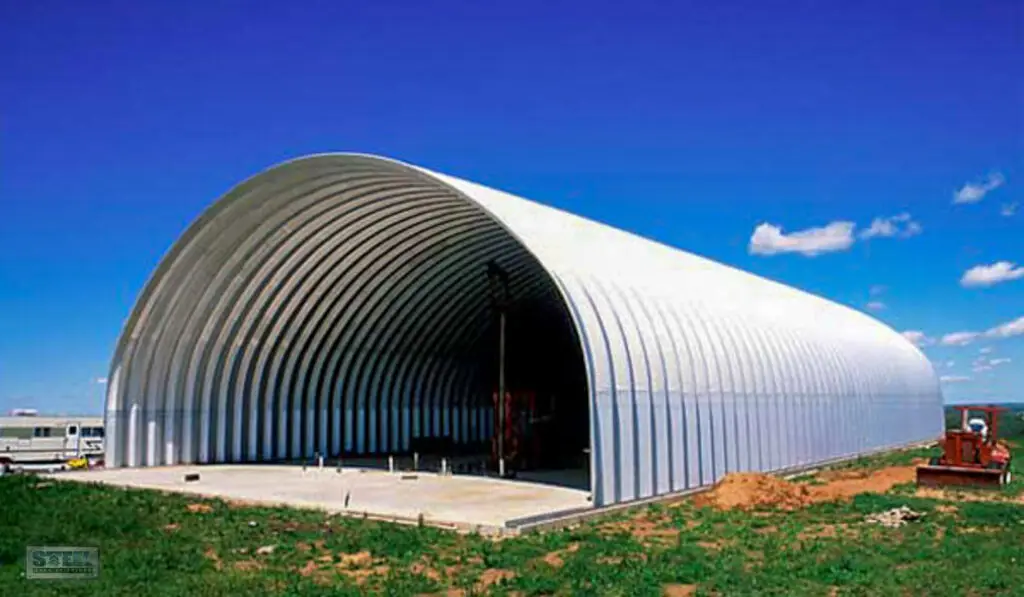
A steel arch building is a structure formed by continuous curved steel panels that act as both the roof and the primary structural system. Unlike conventional steel buildings—which rely on vertical columns, horizontal beams, and secondary framing—arch buildings distribute loads through their curved geometry.
The result is a self-supporting structure that often requires fewer components and less interior framing.
Steel arch buildings are commonly associated with:
Although the term Quonset hut originates from military use during World War II, modern steel arch buildings are engineered systems built to meet current wind, snow, and seismic codes.
The defining characteristic of a steel arch building is its structural geometry.
Steel arch buildings are constructed using precision-formed steel panels that are curved into an arch shape. These panels:
Once assembled, the panels form a continuous shell.
Rather than transferring loads through vertical columns, arch geometry spreads forces evenly along the curve. This allows:
Most steel arch buildings are anchored directly to:
End walls—if included—are typically framed separately using steel or wood.
Steel arch buildings gained prominence during World War II when the U.S. military needed fast, repeatable, low-material structures that could be shipped globally and assembled quickly.
The Quonset hut became a symbol of:
After the war, the design migrated into civilian use, especially in:
Modern steel arch buildings are far more advanced than their early predecessors, benefiting from:
SteelBuildingGarages.com primarily focuses on conventional steel building systems, including:
These systems rely on:
This construction method offers maximum flexibility in layout, height, door placement, and architectural styling.
Understanding the structural distinctions is critical when evaluating building systems.
Steel Arch Buildings
Conventional Steel Buildings
Steel Arch
Conventional Steel
Interior clearance in a steel arch building is influenced by:
While arches can provide excellent center clearance, usable vertical wall space is reduced near the sides.
Traditional steel buildings provide:
This makes them popular for:
Often compatible with:
Because the structure is continuous, load transfer is distributed evenly along the base.
Typically require:
This is not a disadvantage—just a difference in engineering approach.
Steel arch buildings are known for:
This makes them suitable for:
Installation involves:
While this can take longer, it allows for:
Both systems are highly durable when properly engineered.
Neither system is inherently “stronger”—they are simply designed differently.
Both systems are recyclable and align well with sustainable construction practices.
Insulation options include:
However, the curved profile can make some insulation methods more complex.
For conditioned spaces, conventional steel buildings often provide more options.
Openings typically require:
Allow for:
This flexibility makes them ideal for garages and commercial facilities.
Steel arch buildings are frequently used for:
For specialized arch configurations, readers can explore steelarchbuildings.com, which focuses exclusively on arch-based systems and configurations.
Learn more about dedicated steel arch building options at:
Traditional steel buildings remain dominant for:
SteelBuildingGarages.com specializes in these applications, offering extensive customization options.
Costs vary widely based on size, site conditions, and code requirements.
Neither system is universally “cheaper”—cost depends on application.
Both steel arch and conventional steel buildings can be engineered to meet:
Reputable suppliers provide stamped engineering when required.
The decision between a steel arch building and a conventional steel building depends on:
In many cases, both systems are viable, and the right choice is project-specific.
SteelBuildingGarages.com focuses primarily on traditional steel buildings, while recognizing that steel arch structures play an important role in certain applications.
For customers specifically interested in:
We recommend exploring our dedicated partner resource:
👉 Steel Arch Buildings – Complete Systems & Deals
http://steelarchbuildings.com
This allows each platform to focus on what it does best—without overlap or confusion.
A steel arch building kit is a prefabricated building system made from curved steel panels that form both the roof and the structural shell of the building. Unlike traditional steel buildings that rely on vertical columns and rafters, a steel arch building uses its curved shape to distribute loads evenly to the foundation.
Most kits include:
End walls, doors, windows, insulation, and foundations are typically selected or designed separately based on the project’s use and location.
Yes, steel arch buildings can be converted into residential homes, but they are most often used as shell structures rather than turnkey houses.
When used for residential purposes, additional work is required, including:
Steel arch homes are most commonly seen in:
Local building codes and zoning regulations should always be reviewed before planning a residential steel arch structure.
Yes, steel arch buildings can be insulated, though the insulation method differs slightly from conventional steel buildings due to the curved profile.
Common insulation options include:
Spray foam is often preferred because it:
The appropriate insulation system depends on climate, intended use, and whether the building will be conditioned year-round.
Steel arch buildings are generally considered straightforward to assemble, especially for contractors or crews familiar with metal building systems.
Key factors that contribute to ease of construction include:
That said, steel arch buildings still require:
While some smaller kits can be assembled by experienced DIY builders, larger structures typically benefit from professional installation.
In most cases, steel arch buildings do not require interior framing or support posts.
The curved steel panels act as a self-supporting shell, allowing for:
Interior framing may still be added for:
However, these are functional additions—not structural requirements.
Modern steel arch buildings can span impressive widths without interior supports.
Typical widths include:
Maximum width depends on:
For very wide clear-span arch buildings, engineered systems and site-specific analysis are essential.
Yes, steel arch buildings can be fully permanent structures when installed on engineered foundations and built to code.
They are commonly used as permanent facilities for:
In some cases, steel arch buildings are also used for temporary or relocatable installations, depending on foundation type and local regulations.
When properly designed, installed, and maintained, steel arch buildings can last several decades.
Longevity is influenced by:
Many steel arch buildings constructed decades ago are still in service today, particularly in agricultural and industrial settings.
Steel arch buildings perform well in high wind and heavy snow environments due to their curved, aerodynamic shape.
Benefits include:
As with any building system, proper engineering for local conditions is critical.
Steel arch buildings are widely used for:
They are especially well-suited for applications requiring:
Steel Arch Buildings – Complete Arch Systems
http://steelarchbuildings.com
This site focuses exclusively on arch and Quonset-style structures, while SteelBuildingGarages.com continues to specialize in conventional steel building solutions.
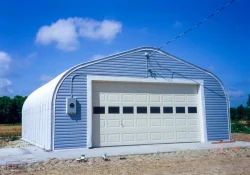
Straight sidewalls & A-frame style peaked roof.
Straight sidewalls combined with a curved arch roof.
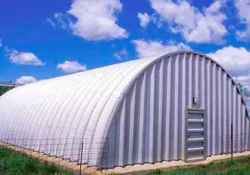
100% usable clearspan interiors that have no beams or trusses to get in your way.
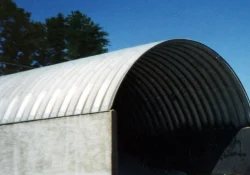
R-Model Buildings can block existing walls and are great for storing rock aggregates, salt, or other loose building materials, like granite or coal. Although “R” model arch systems don’t include sidewalls, they’re the industry’s more economical and versatile building solution.
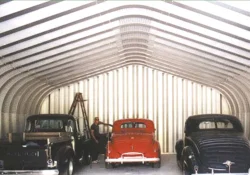
Features a single side-wall and half roof configuration, roughly resembling a semi-circle that can be attached to an existing building or wall.